Why Trade Show Contacts Rarely Turn Into Orders
Market Entry & Representation
8 September 2026
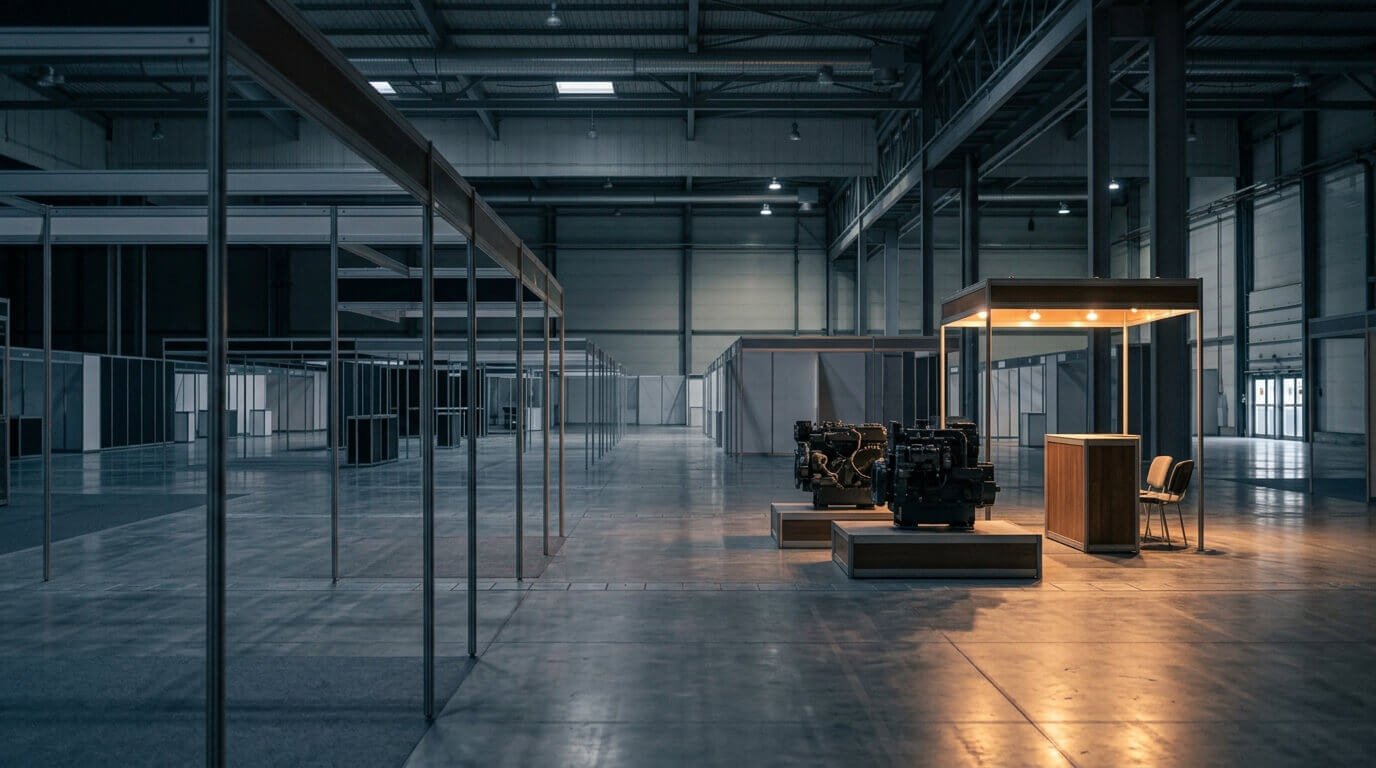
A trade show feels like success. Three days of conversations. A stack of business cards. Real interest from real buyers. Then the weeks pass, and almost none of it turns into an order.
This is the quiet truth of trade show lead generation. The problem is rarely the show itself. The problem is what happens after everyone goes home.
Most trade show contacts do not fail because the product was wrong. They fail because no one bridged the gap between a friendly conversation and a confident decision.
For a company entering the UK or European market, that gap is wider than it looks. Let’s walk through why.
The Contact Is Not the Deal
At a show, interest is easy. A buyer stops, likes what they see, and takes a card. That is a good moment. But it is not a commitment. It is curiosity.
Curiosity fades fast. Within a week, that buyer is back at their desk, buried in their own work. The conversation that felt important on the show floor is now one of forty things competing for their attention.
If nothing structured follows, the contact goes cold. Not because they were not interested. Because no one gave them a reason to stay interested.
Why the Gap Is Wider Across Borders
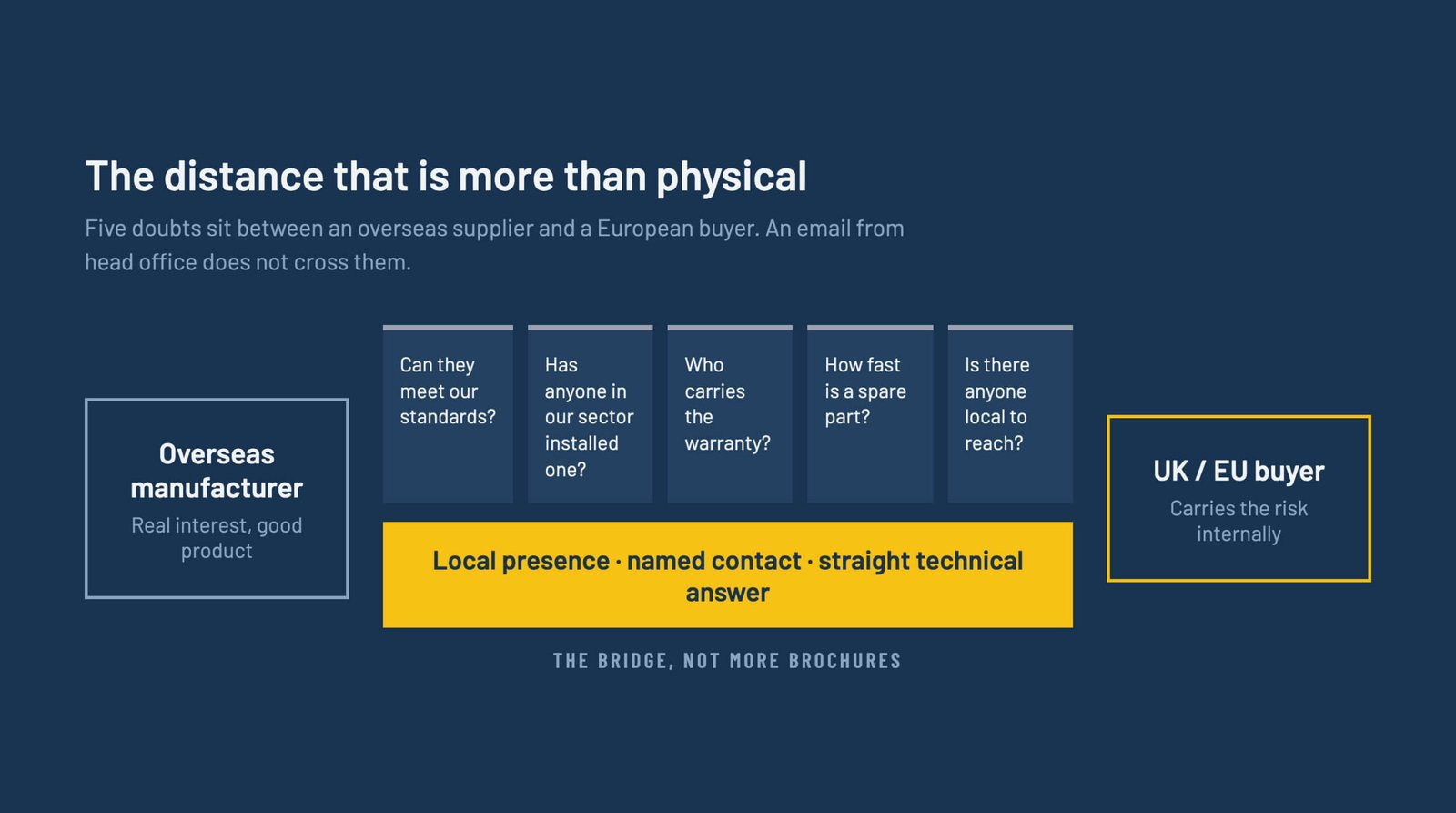
Now add a border. A manufacturer meets a UK or European buyer at a show. The interest is real. But the follow-up has to cross a distance that is more than physical.
The buyer has questions. Can this supplier meet our standards? Has anyone in our sector installed one already? Who carries the warranty if something fails? How quickly can we get a spare part? Who handles support, and is there anyone local we can actually reach? These are not doubts about the product. They are doubts about the risk of buying from far away.
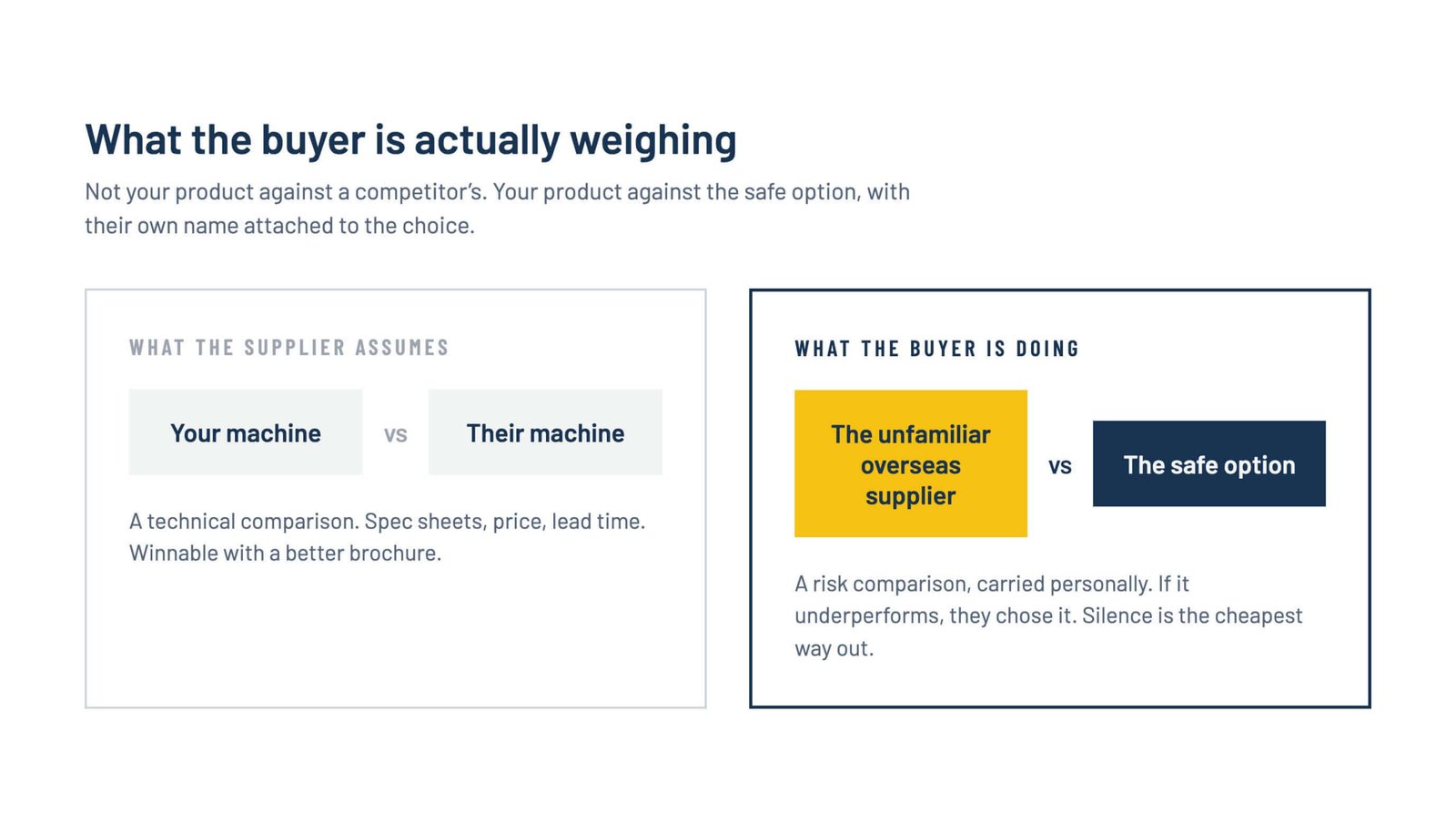
It helps to see it from their side. That buyer has to put your name in front of their own management. If the equipment underperforms, they own that decision. They chose the unfamiliar overseas supplier. They are not weighing your product against a competitor’s product. They are weighing it against the safe option.
If the only follow-up is an email from an overseas sales team, those doubts stay unanswered. The buyer does not say no. They simply go quiet. And silence, in business, usually means no.
Trade Show Lead Generation Is a Process, Not an Event
The companies that turn contacts into orders do one thing well. They follow up in a way that answers both kinds of question, the commercial and the technical, at the same time.
That means more than a polite email. It means someone who can talk to the buyer in their own language, understand their real concern, and give a straight technical answer.
Often the real concern is an engineering one. Will this suit our material at its worst, not its average? That is the same question that decides whether a plant performs, and it deserves a proper answer rather than a reassuring one.
The show opens the door. The follow-up decides whether anyone walks through it.
What a Follow-Up Sequence Should Contain
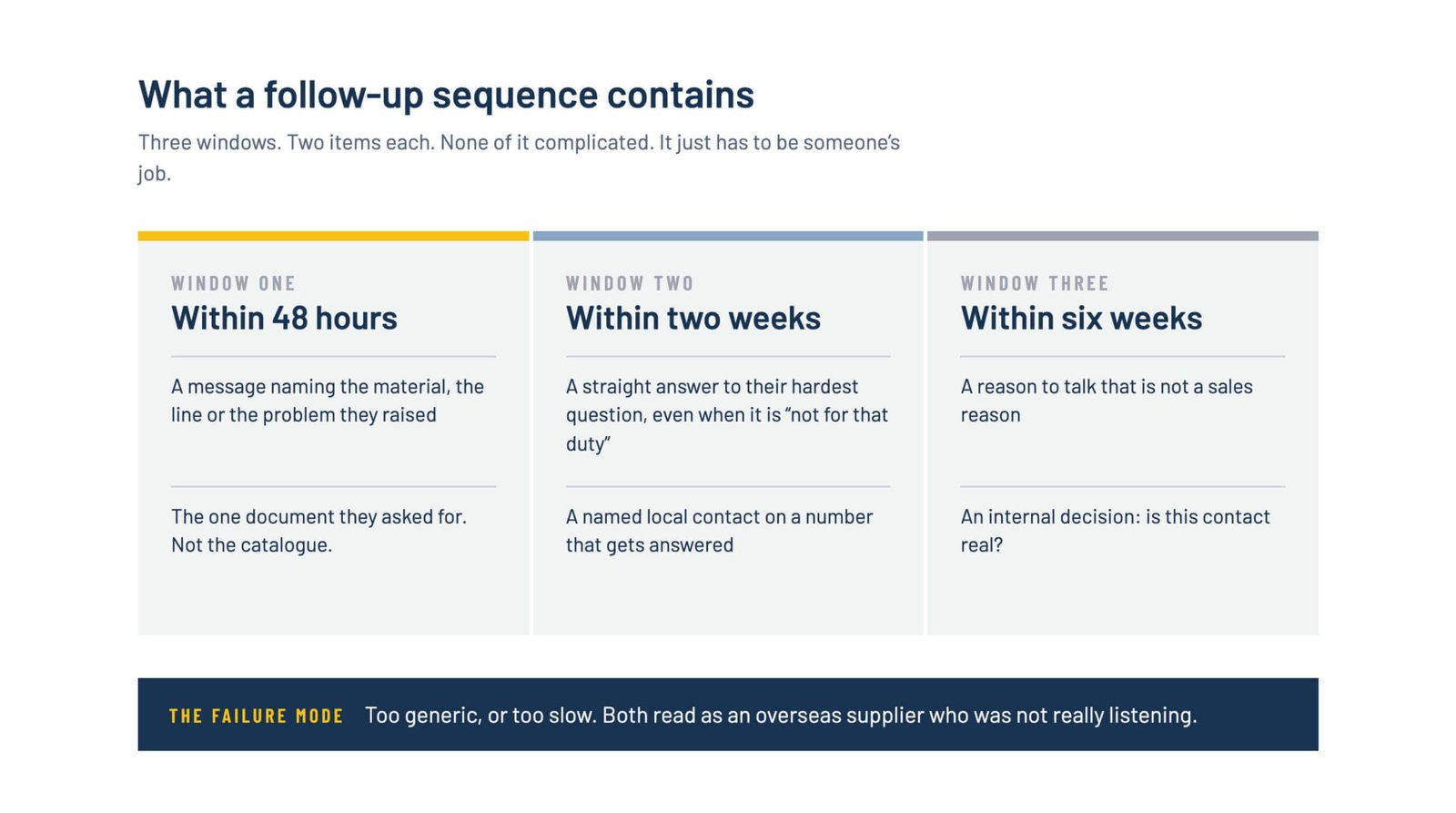
Most follow-up fails by being either too generic or too slow. A sequence that works looks roughly like this.
Within forty-eight hours
- A short message referencing the specific thing you discussed. Name the material, the line, or the problem they raised. Anything that reads as a template confirms their worst assumption about an overseas supplier.
- The one document they asked for. Just that one. Not the full catalogue.
Within two weeks
- A straight answer to their hardest question, even when the answer is that your equipment is not right for that duty. Saying so builds more credibility than any brochure.
- A named local contact with a phone number that gets answered. A name and a mobile does more than a company address.
Within six weeks
- A reason to talk again that is not a sales reason. A relevant reference project, a standards change that affects them, or an offer to visit their site.
- An internal decision on whether this contact is real. Some are not. Deciding that quickly leaves time for the ones that are.
None of this is complicated. It just has to be someone’s job, and usually it is nobody’s.
WHERE WE FIT
This is part of what Euroriva does. We act as a local presence for companies entering the UK and European market. When a contact needs a real answer, we are there to give it, with both the commercial and the engineering side covered.
We know the sectors. We know the questions UK and European buyers ask. Because we have worked inside these industries ourselves, we can turn a business card into a conversation that leads somewhere.
That work sits inside our Market Entry & Representation service. The Market Presence and Visibility Pack covers the outreach and materials. Rep-as-a-Service gives you a named person on the ground.
Frequently Asked Questions
Trade show lead generation usually fails after the event, not at it. Nothing structured follows the show. Interest fades within days. Even warm contacts quietly disappear.
Follow up within forty-eight hours with something specific to the conversation you had. Then answer the buyer’s questions, commercial and technical. A local point of contact who can speak the buyer’s language makes a real difference, especially across borders.
A buyer weighing an overseas supplier worries about standards, support and reachability. They also carry the internal risk of that choice. If follow-up comes only from a distant sales team, those worries stay unanswered and the deal stalls.
Meeting UK or European Buyers?
If you are meeting UK or European buyers and want those conversations to lead somewhere, we’d love to help. We can be the local presence that turns interest into orders.